
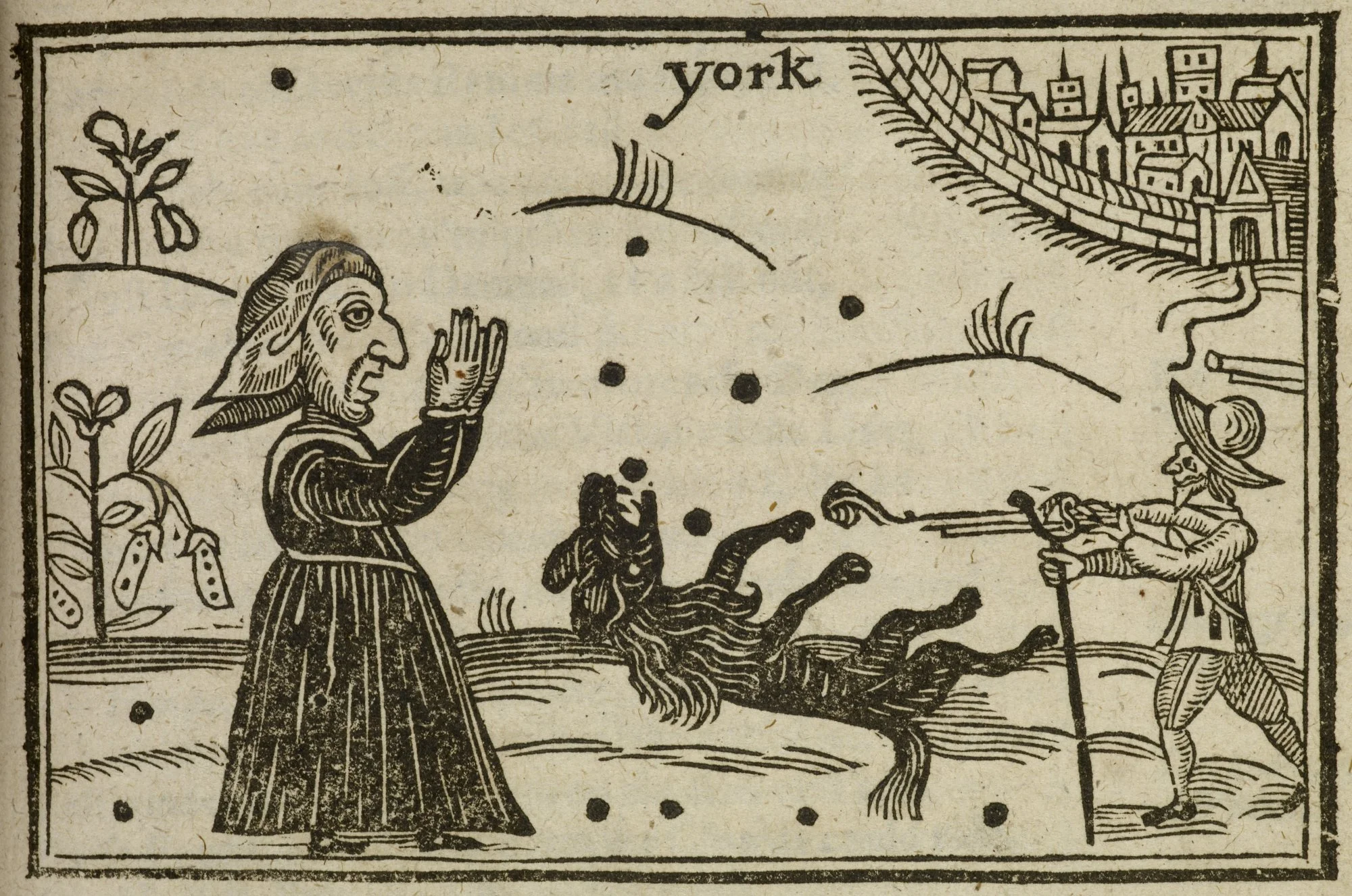
In England, continental Europe and New England, witches were widely blamed for causing disasters - including the death of Prince Rupert’s dog during the English Civil War. Woodcut from A Dog’s Elegy, or Rupert’s Tears for the Late Defeat at Marston-Moore (London, July 27, 1644). Credit: British Library
On November 16, 1688, the merchant and future Salem witch judge Samuel Sewall, on glancing out his window, wrote in his diary. "The widow Glover is drawn by to be hanged,” he observed. “Mr. Larkin seems to be Marshal….The Constables attend, and Justice Bullivant there."
The matter-of-fact language in which the widow Glover’s sentencing and death were recorded reflects the quotidian nature of 17th century accusations of witchcraft. Across continental Europe and Scotland, and to a lesser extent England, women (and some men) were accused of witchcraft in the hundreds. In New England, there were far fewer. But the pattern was the same: the victimisation of people who did not speak English, were not part of the mainstream culturally or by faith, were often impoverished or difficult neighbours - in other words, people who were easily made the “other”.
Glover, whose case epitomises this “othering,” was the last person executed for witchcraft in Boston (Massachusetts ended executions for witchcraft after Salem, four years later). In 1988, Boston city council designated November 16 Goody Glover Day, marking the tricentennial anniversary of the execution of an impoverished Irish Catholic widow whose life was cut short by religious intolerance and neighborhood panic.
Although her memorial plaque lists the widow Glover’s name as Ann, there is no historical record of her first name.
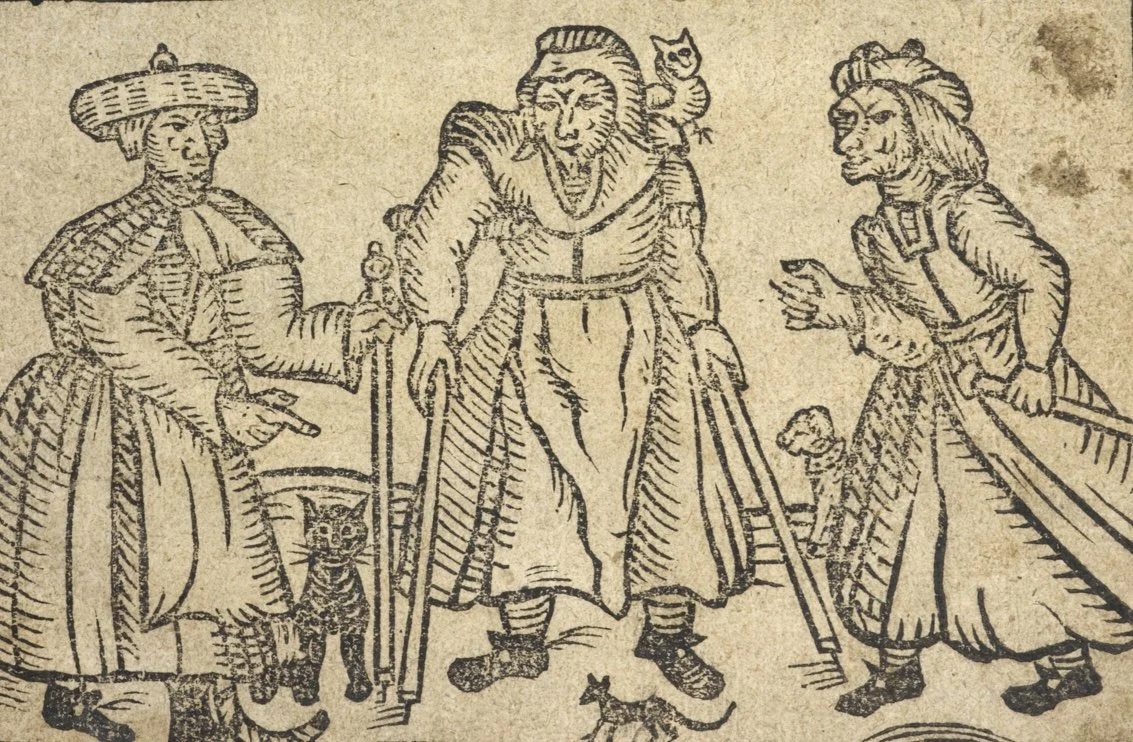
The plethora of pamphlets about witchcraft in London bookstalls shows the ubiquitous nature of suspicions of unnatural forces. Margaret Flower, The Wonderful discoverie of the Witchcrafts of Margaret and Phillip Flower ... executed at Lincolne, March, 1618, who were ... condemned for confessing themselves actors in the destruction of H. Lord Rosse ... together with the ... examinations and confessions of A. Baker, J. Willimot and E. Greene, witches in Leicestershire (London: 1619). Credit: British Library
In the summer of 1688, Glover’s daughter, a laundress, was accused of stealing linen by Martha Goodwin, the teenage daughter of a local mason. When Glover angrily defended her daughter against the accusation, Martha and three younger siblings suddenly began barking and suffering severe fits and bodily contortions. Convinced that the children were under a diabolical curse, authorities arrested Glover.
Afflicted girls and young women in England had accused their neighbors of witchcraft for nearly a century before the Glover-Goodwin case in Boston. Among them were the Throckmorton sisters of Warboys in 1589, Anne Gunter of North Moreton in 1604, the Fairfax sisters of Fewston in 1621, and the Pacy sisters of Lowestoft in 1661.
At trial, Glover faced an unsympathetic puritan magistracy. A native speaker of Irish Gaelic, she had to testify through interpreters and failed to recite the Lord’s Prayer in the approved English manner. Boston minister Cotton Mather took a leading role in her interrogation and documented her trial.
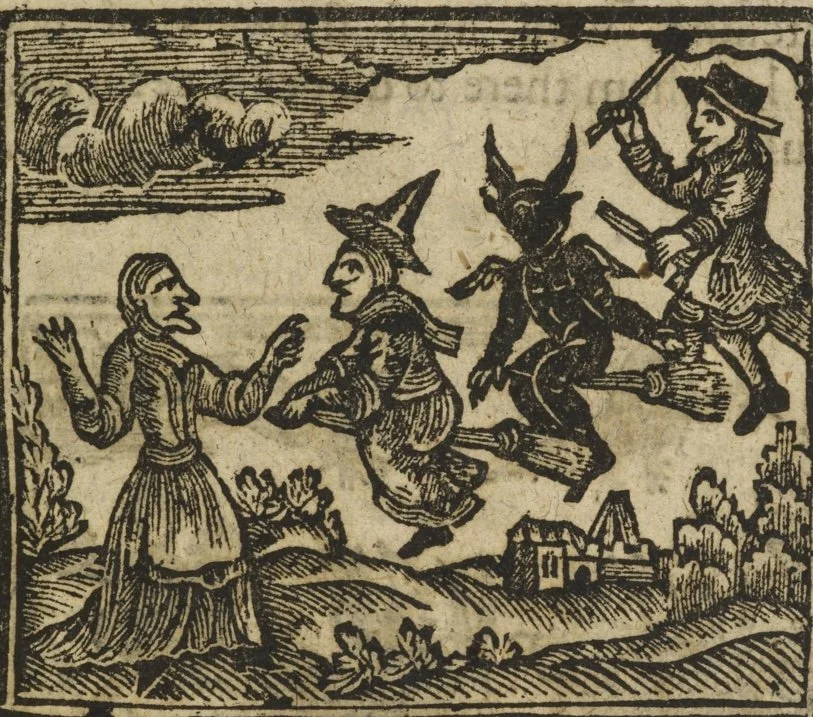
The History of Witches and Wizards: giving a true account of all their tryals in England, Scotland, Sweedland, France, and New England… (London: For C. Hitch and L. Haws, 1700(?)). Credit: Courtesy of the British Library
Although records of the trial have not survived, we know something about it from the words of Boston minister Joshua Moody, one of the ministers brought into the case. Moody wrote to Increase Mather a few months later, describing how the Goodwin parents asked the four ministers of Boston and the minister of Charlestown to keep a day of prayer at their house. Later, Cotton Mather wrote about Glover in Memorable Providences, Relating to Witchcrafts and Possessions (Boston, 1689) and in Magnalia Christi Americana (London, 1702). A London edition of Memorable Providences was published in 1691 as Late Memorable Providences Relating to Witchcrafts and Possessions.
FIND OUT MORE
WATCH
The Other: Understanding Witch Hunts, Part I, with Emerson “Tad” Baker, Josh Hutchinson and Sarah Jack
Resistance: Stopping Witch Hunts, with Emerson “Tad” Baker, Josh Hutchinson and Sarah Jack
And for the wider context, watch this brilliant presentation by puritan scholar
David D. Hall, Wonders, Portents and Providences in Early New England
READ
Baker, Emerson W. A Storm of Witchcraft: The Salem Trials and the American Experience. New York: Oxford University Press, 2015.
Baker, Emerson W. The Devil of Great Island: Witchcraft and Conflict in Early New England. New York: Palgrave MacMillan, 2007.
Gaskill, Malcolm. The Ruin of All Witches: Life and Death in the New World. New York: Alfred A. Knopf, 2022.
Norton, Mary Beth. In the Devil’s Snare: The Salem Witchcraft Crisis of 1692. New York: Alfred A. Knopf, 2002.
Roach, Marilynne. The Salem Witch Trials: A Day by Day Chronology of a Community under Siege. New York: Cooper Square Press, 2002.
Rosenthal, Bernard et al, eds. Records of the Salem Witch-Hunt. New York: Cambridge University Press, 2009.
LISTEN
"The Salem Witch Trials: Interpreting History and Finding Relevance" a presentation by Dan Lipcan and Paula Richter, curators at the Peabody Essex Museum, for PHB. Watch it here.
Unobscured with Aaron Mahnke, Season One: The Salem Witch Trials https://www.grimandmild.com/unobscured
The Thing About Witch Hunts witchhuntshow.com
The Thing About Salem aboutsalem.com
Sarah Jack, a descendant of colonial-era witch trial victims, is the founding executive director of the nonprofit End Witch Hunts. Based in Colorado, Sarah also hosts the podcasts The Thing About Witch Hunts and The Thing About Salem. She specializes in consulting and teaching about witch hunts, past and present, leveraging her extensive networks to bring these conversations to broader communities and platforms. Her work has been highlighted globally and featured in outlets including the New York Times and NPR.
Josh Hutchinson is a podcaster, writer, and advocate. As a descendant of people involved in New England witch trials, co-founder of End Witch Hunts, and creator of the podcasts The Thing About Witch Hunts and The Thing About Salem, Josh blends historical knowledge and modern activism in his work. Josh continues to shed light on historical injustices while advocating for the elimination of modern harmful practices related to accusations of witchcraft and ritual attacks.
End Witch Hunts brings light to the true nature of witch trials and witch hunts through public education, advocacy, memorialization, and exoneration. The sole nonprofit in the United States prioritising awareness about modern-day witchcraft, End Witch Hunts tells the stories of victims both past and present to generate discussion of lessons to be learned. End Witch Hunts offers two weekly podcasts, blogs, online presentations, conference addresses, live events, and collaboration with organizations including the International Network Against Witchcraft Accusations and Ritual Attacks.