Resources
Do you have a hankering to bake Narragansett journey cake or plumb the depths of 17th century medicine? Scroll down for our booklet of 17th-century English, Narragansett, and New England recipes, The Pleasure of the Taste (first published in 2015 and still in demand!), and our illustrated glossary of 17th-century medical terms. What was lithotomy and why did people dread it? Find out below.
Looking for more reading materials? There’s a vast literature of exciting work on early New England. The lists we’ve compiled below only begin to scratch the surface. For fear of overwhelming readers, we’ve listed just some of our favourites – there are many more on our overflowing bookshelves.
If you’ve got a book to recommend, let us know! Email phbostons@gmail.com.
From their table to yours
Savor the taste of early Massachusetts with the Partnership of Historic Bostons’ 24-page recipe booklet, The Pleasure of the Taste.
From Narragansett venison stew to English pippin tart − it’s yours for the cooking! We offer recipes from the English, New England and Native American past, modernized for today’s kitchen. Based on original recipes from 17th century cookery books, the Plimoth Patuxet Museums, and the Tomaquag Museum.
Contact us to purchase a copy of The Pleasure of the Taste for $5 plus postage.


17th century medicine defined
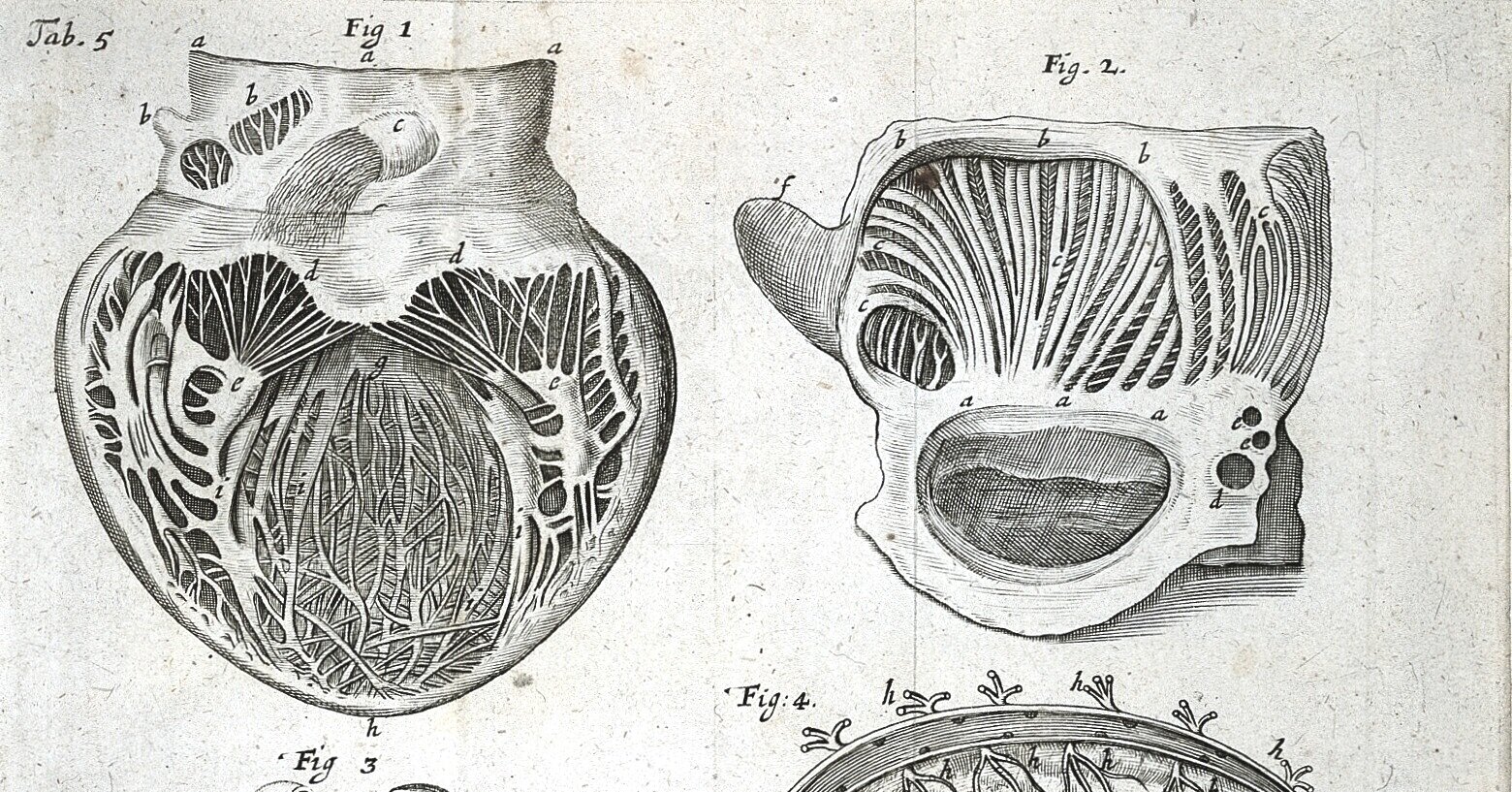
From caudle to zotica, 17th century medicine abounded in terms that today leave us mystified. At least, that’s what we found when we offered our Partnership of Historic Bostons’ 2017 fall lecture series on medicine and mortality. What is a humor, and why do we have four? What was the Rev. Thomas Thacher’s cure for a plethorie in the midst of a Boston smallpox epidemic? To answer these and other questions, we created a short glossary of 17th century medical terminology. Here’s an online version.



Reading List
General
Bailyn, Bernard. The Barbarous Years: The Peopling of British North America: The Conflict of Civilizations, 1600-1675. New York: Alfred A. Knopf, 2012.
Bragdon, Kathleen J. Native People of Southern New England, 1500-1650. Norman, OK: University of Oklahoma Press, 1996.
——————————-. Native People of Southern New England, 1650-1775. Norman, OK: University of Oklahoma Press, 2020.
Bremer, Francis J. One Small Candle: The Plymouth Puritans and the Beginning of English New England. New York: Oxford University Press, 2020.
Grandjean, Katherine. American Passage: The Communications Frontier in Early New England. Cambridge: Harvard University Press, 2015.
Hall, David D. The Puritans: A Transatlantic History. Princeton: Princeton University Press, 2019.
Philbrick, Nathaniel. Mayflower: A Story of Courage, Community, and War. New York: Penguin, 2006.
Silverman, David J. This Land is Their Land: The Wampanoag Indians, Plymouth Colony, and the Troubled History of Thanksgiving. New York: Bloomsbury Publishing, 2019.
Everyday life
Hall, David D. Worlds of Wonder, Days of Judgment: Popular Religious Belief in Early New England. Cambridge: Harvard University Press, 1989.
Deetz, James and Patricia Scott Deetz. The Times of Their Lives: Life, Love, and Death in Plymouth County. New York: Anchor Books, 2000.
Morgan, Edmund S. The Puritan Family: Religion and Domestic Relations in Seventeenth-Century New England. New York: Harper & Row, 1966.
Puritanism
Bremer, Francis J. First Founders: American Puritans and Puritanism in an Atlantic World. Lebanon, NH: University of New Hampshire Press, 2012.
Bremer, Francis J. Puritanism: A Very Short History. New York: Oxford University Press, 2009.
Bremer, Francis J. John Winthrop: America’s Forgotten Founding Father. Oxford: Oxford University Press, 2005.
Cooper, James F. Tenacious of Their Liberties: The Congregationalists in Colonial America. New York: Oxford University Press, 1999.
Hall, David D. A Reforming People: Puritanism and the Transformation of Public Life in New England. New York, Knopf, 2011.
Morgan, Edmund S. The Puritan Dilemma: The Story of John Winthrop. New York: Pearson, 2007.
Rogers, Daniel. As a City on a Hill: The Story of America’s Most Famous Lay Sermon. Princeton: Princeton University Press, 2018.
Rogers-Stokes, Lori. Records of Trial from Thomas Shepard's Church in Cambridge, 1638-1649: Heroic Souls. London: Palgrave Macmillan, 2020.
Women
LaPlante, Eve. American Jezebel: The Uncommon Life of Anne Hutchinson, the Woman Who Defied the Puritans. New York: Harper Collins, 2004.
Ulrich, Laurel Thatcher. Good Wives: Image and Reality in the Lives of Women in Northern New England 1650 – 1750. New York: Vintage, 1980/1991.
black new england
Greene, Lorenzo, The Negro in Colonial New England. New York: Columbia University Press, 1942.
Handouts for Recovering Black History: A Workshop, presented by Michelle Stahl, Monadnock Center for History and Culture, and Jennifer Carroll, Historical Society of Cheshire County, April 17, 2024, for local historians identifying the Black community in early New England:
Town History Research and Search Terms
witchcraft
Baker, Emerson W. A Storm of Witchcraft: The Salem Trials and the American Experience. New York: Oxford University Press, 2015.
Baker, Emerson W. The Devil of Great Island: Witchcraft and Conflict in Early New England. New York: Palgrave MacMillan, 2007.
Behringer, Wolfgang. Witches and Witch-Hunts: A Global History. Wiley, 2004.
Gagnon, Daniel A. A Salem Witch: The Trial, Execution and Exoneration of Rebecca Nurse. Yardley, PA: Westholme Publishing, 2023.
Gaskill, Malcolm. The Ruin of All Witches: Life and Death in the New World. New York: Alfred A. Knopf, 2022.
Gaskill, Malcolm. Witchfinders: A Seventeenth-Century English Tragedy. Cambridge: Harvard University Press, 2005.
Hite, Richard. In the Shadow of Salem: The Andover Witch Hunt of 1692. Westholme, 2018.
Moyer, Paul B. Detestable and Wicked Arts: New England and Witchcraft in the Early Modern Atlantic World. Cornell University Press, 2020.
Norton, Mary Beth. In the Devil’s Snare: The Salem Witchcraft Crisis of 1692. New York: Alfred A. Knopf, 2002.
Elizabeth Reis. Damned Women: Sinners and Witches in Puritan New England. Cornell University Press, 1997.
Roach, Marilynne. The Salem Witch Trials: A Day by Day Chronology of a Community under Siege. New York: Cooper Square Press, 2002.
Roach, Marilynne. Six Women of Salem: The Untold Story of the Accused and Their Accusers in the Salem Witch Trials. Boston: Da Capo Press, 2013.
Rosenthal, Bernard et al, eds. Records of the Salem Witch-Hunt. New York: Cambridge University Press, 2009.
Ross III, Richard S. Before Salem: Witch Hunting in the Connecticut River Valley, 1647-1663. Jefferson, North Carolina: McFarland & Co., 2017.
WEBSITES
Salem Witch Trials: Documentary Archive and Transcription Project https://salem.lib.virginia.edu
17th Century New England, with Special Emphasis on the Essex County Witch Hunt of 1692 http://www.17thc.us/
Cornell University Witchcraft Collection https://rmc.library.cornell.edu/witchcraftcoll/
Salem’s Trials: Lessons and Legacies of 1692. A Symposium held at Salem State University on June 10, 2017, to commemorate the 325th anniversary of the witch trials. Available at: https://www.c-span.org/organization/salem-state-university/45222/
WATCH AND LISTEN
"The Salem Witch Trials: Interpreting History and Finding Relevance" a presentation by Dan Lipcan and Paula Richter, curators at the Peabody Essex Museum, for PHB. Watch it here.
Unobscured with Aaron Mahnke, Season One: The Salem Witch Trials https://www.grimandmild.com/unobscured
The Thing About Witch Hunts witchhuntshow.com
The Thing About Salem aboutsalem.com
RADICALISM AND RESISTANCE IN THE ENGLISH RESISTANCE: A READING LIST FROM RACHEL FOXLEY, UNIVERSITY OF READING
A nice accessible survey of political ideas before the English Revolution is Johann Sommerville, Royalists and Patriots: Politics and Ideology in England, 1603-1640 (second edition) (1999).
On the English Revolution, there are plenty of good books! A good collection of shorter chapters on different themes is the Oxford Handbook of the English Revolution (2015), edited by Michael Braddick.
On the Levellers:
I’ve written a very short chapter introducing the Levellers in Laura Lunger Knoppers (ed) The Oxford Handbook of Literature and the English Revolution (Oxford, 2012).
Longer works on the Levellers:
Gary De Krey, Following the Levellers (London, 2017), volumes 1 and 2. Volume 1 looks at the Leveller movement itself; volume 2 traces the future lives of Leveller followers after the collapse of the movement.
John Rees, The Leveller Revolution: Radical political organisation in England, 1640-1650 (London, 2017) is a good accessible telling and analysis of the movement.
Pauline Gregg, Free-born John : a biography of John Lilburne (1961) is still readable and useful. A newer biography is by Michael Braddick, The Common Freedom of the People: John Lilburne and the English Revolution (2018) – this emphasizes Lilburne’s engagement with ideas of law.
More academic works are my own book, Rachel Foxley, The Levellers: Radical political thought in the English Revolution (Manchester, 2013); and the brilliant book by David Como Radical Parliamentarians and the English Civil War (Oxford, 2018), which doesn’t get as far as the height of the Leveller movement, but uncovers the roots of Leveller and radical ideas earlier in the revolution in great (and very illuminating) detail.
The article on the afterlife of the Leveller movement (or Lilburne specifically) is Edward Vallance, ‘Reborn John: The Eighteenth-century afterlife of John Lilburne’, History workshop journal , 10/2012, Volume 74, Issue 74
On the republicans:
Blair Worden, Literature and Politics in Cromwellian England: John Milton, Andrew Marvell, Marchamont Nedham (Oxford, 2007) traces the careers of two of the republicans I briefly mentioned, placing them in the detailed context of politics in the 1650s.
Rachel Hammersley, James Harrington: An Intellectual Biography (Oxford, 2019) is the most authoritative work on all aspects of Harrington’s work and political thinking. Her book Republicanism: An Introduction (Cambridge, 2020), offers a very accessible introduction to republican ideas across periods, with a chapter on the English Revolution and further chapters on eighteenth-century republicanism and the American and French Revolutions – this is a really clearly written book which I would highly recommend.
We would add two more books to Rachel Foxley’s list:
Philip Baker, ed., and Geoffrey Robertson, intro., The Levellers: The Putney Debates (London: Verso Books, 2007).
Andrew Sharp, ed., The English Levellers (Cambridge: Cambridge University Press, 1998), which includes 14 Leveller pamphlets and broadsheets.
Slavery
Secondary sources
Allibhai, Aabid, “Race & Slavery at the First Church in Roxbury: The Colonial Period, 1631-1775,” Unitarian Universalist Church, February 3, 2023.
Boles, Richard, Dividing the Faith: The Rise of Segregated Churches in the Early American North. New York: New York University Press, 2020.
DasSarma, Anjali, and Linford D. Fisher, “The Persistence of Indigenous Unfreedom in Early American Newspaper Advertisements, 1704-1804,” Slavery & Abolition, March 30, 2023, 1-25.
Fisher, Linford D., “‘Why Shall Wee Have Peace to Bee Made Slaves’: Indian Surrenderers During and After King Philip’s War,” Ethnohistory 64, no.1 (January 1, 2027), 91-114.
Gonzalez, Eduardo, “Of One Blood? Cotton Mather’s Christian Slavery”, historicbostons.org
Hardesty, Jared Ross, Black Lives, Native Lives, White Worlds: A History of Slavery in New England. Amherst: University of Massachusetts Press, 2019.
Hardesty, Jared Ross, Unfreedom: Slavery and Dependence in Eighteenth-Century Boston. New York: New York University, 2016.
Harvard University, “Responsibility and Repair: Legacies of Indigenous Enslavement, Indenture, and Colonization at Harvard and Beyond,” conference, November 2 and 3, 2023.
Harvard University, “Report of the Presidential Committee on Harvard & the Legacy of Slavery.” Cambridge, MA: Harvard University, 2022.
Manegold, C.S. Ten Hills Farm: The Forgotten History of Slavery in the North. Princeton: Princeton University Press, 2010.
Maskiell, Nicole Safford, “‘Here Lyes the Body of Cicely Negro’: Enslaved Women in Colonial Cambridge and the Making of New England History,” New England Quarterly, vol. XCV, no. 2, June 2022.
Newell, Margaret Ellen, “Our Hidden History: Roger Williams and Slavery’s Origins,” Providence Journal and Bulletin, August 29, 2020.
Newell, Margaret Ellen, “The Changing Nature of Indian Slavery in New England, 1670-1720,” in Colin G. Calloway and Neal Salisbury, eds., Reinterpreting New England Indians and the Colonial Experience. Boston: The Colonial Society of Massachusetts, 2003, 106-136.
Newell, Margaret Ellen, Brethren by Nature: New England Indians, Colonists, and the Origins of American Slavery. Ithaca: Cornell University Press, 2015.
Sesay Jr., Chernoh M., “The Revolutionary Black Roots of Slavery’s Abolition in Massachusetts,” in New England Quarterly, vol. LXXXVII, no. 1, March 2014.
Tucker, Wayne, Eleven Names Project: Recovering Enslaved People of Massachusetts, substack
Warren, Wendy. New England Bound: Slavery and Colonization in Early America. New York: Liveright/W.W. Norton, 2018.
Primary sources
Jonathan Edwards’s church records from Northampton, Mass., Congregational Library & Archives.
“Flora's confession and testimony, 1749 July 23” from the Second Church of Ipswich, Mass., Congregational Library & Archives.
Mather, Cotton, A Good Master Well Served. A Brief Discourse on the Necessary Properties & Practices of a Good Servant in Every-Kind of Servitude. Boston: B. Green and J. Allen, 1696.
Mather, Cotton, The Negro Christianized. An Essay to Excite and Assist that Good Work, The Instruction of Negro-Servants in Christianity. Boston: B. Green, 1706.
Mather, Cotton, “Rules for the Society of Negroes,” broadsheet, 1693.
Sewell, Samuel, The Selling of Joseph: A Memorial. Boston: printed by Bartholomew Green and John Allen, 1700.
Stolen Relations: Recovering Stories of Indigenous Enslavement in the Americas.
war for the dawnland/King Philip’s War
Brooks, Lisa. Our Beloved Kin: A New History of King Philip’s War. New Haven: Yale University Press, 2018.
DeLucia, Christine M. Memory Lands: King Philip’s War and the Place of Violence in the Northeast. New Haven: Yale University Press, 2019.
Lepore, Jill. The Name of War: King Philip's War and the Origins of American Identity. New York: Vintage, 1999.
Mandell, Daniel R. King Philip’s War: Colonial Expansion, Native Resistance, and the End of Indian Sovereignty. Baltimore: Johns Hopkins University Press, 2010.
March, Kevin A. “‘The Violences of Place and Pen’: Identities and Language in the Twentieth-Century Historiography of King Philip’s War.” Madison Historical Review, Volume 17, Article 3, 2020.
McBride, Kevin et al. “The 1676 Battle of Nipsachuck: Identification and Evaluation,” technical report, National Park Service, American Battlefield Protection Program. April 12, 2013.
Schultz, Eric B. and Michael J. Tougias. King Philip’s War: The History and Legacy of America’s Forgotten Conflict. New York: Countryman Press, 2000.
Native people of the Eastern Woodlands
William Apess. On Our Own Ground: The Complete Writings of William Apess, a Pequot, ed. Barry O’Connell. Amherst: University of Massachusetts Press, 1992.
Calloway, Colin G. After King Philip’s War: Presence and Persistence in Indian New England. Hanover: Dartmouth College Press, 1997.
Coombs, Linda. Colonization and the Wampanoag Story. New York: Crown Books, 2023.
Demos, John. The Unredeemed Captive: A Family Story from Early America. New York: Penguin, 1995.
Lopenzina, Drew, Through an Indian’s Looking-Glass: A Cultural Biography of William Apess, Pequot. Amherst: University of Massachusetts Press, 2017.
Lopenzina, Drew, Red Ink: Native Americans Picking Up the Pen in the Colonial Period. Albany: State University of New York Press, 2012.
Mandell, Daniel R. Tribe, Race, History: Native Americans in Southern New England, 1780-1880. Baltimore: Johns Hopkins University Press, 2010.
National Park Service, “Native Americans and the Boston Harbor Islands.”
O’Brien, Jean M. Firsting and Lasting: Writing Indians Out of Existence in New England. Minneapolis: University of Minnesota Press, 2010.
Sakonnet History Project and Little Compton Historical Society. Reconnections: Essays and Artwork by Wampanoag and Narragansett Knowledge Keepers. Little Compton Historical Society, Rhode Island, 2025.
Soliz, Chester P. The Historical Footprints of the Mashpee Wampanoag: Appeal to the Great Spirit. Sarasota, Florida: Bardolf & Company, 2001.
Strobel, Christoph. Native Americans of New England. Praeger, 2020.
Waabu O’Brien, Frank, Understanding Indian Place Names in Southern New England. Boulder: Bauu Press, 2010.
Warren, James. God, War and Providence: The Epic Struggle of Roger Williams and the Narragansett Indians against the Puritans of New England. New York: Scribner Publishing, 2018.
Williams, Roger. A Key Into the Language of America, ed. Dawn Dove, Sandra Robinson, Loren Spears, Dorothy Herman Papp, Kathleen Bragdon. The Tomaquag Museum Edition. Yardley, PA: Westholme Publishing, 2019.
The tribes of the Eastern Woodlands also provide important histories of their people, including museums. This is not a complete list.
Mashantucket Pequot Museum and Research Center
Mashantucket (Western) Pequot Tribal Nation
Massachusett Tribe at Ponkapoag
Nulhegan Abenaki Tribe at Nulhegan-Memhremagog
Wampanoag Tribe of Chappaquidick
Wampanoag Tribe of Gay Head (Aquinnah)